
 153 Leytonstone Road, E15 1LH, London






Choosing the right cordless drill is a critical decision for any tradesperson or serious DIY enthusiast. With technology constantly evolving, one term frequently appears on high-performance models: brushless. But is a brushless drill genuinely better for demanding site work, or is it just a marketing gimmick to justify a higher price? Understanding the mechanics behind this innovation is key to making a sound investment in your tool kit.
Table of Contents
-
Understanding Brushless Technology: What It Is and How It Works
-
The Professional Benefits: Why Tradespeople Choose Brushless Drills
Understanding Brushless Technology: What It Is and How It Works
At its core, a brushless motor is a significant upgrade over the traditional brushed motor design that has been used for decades. It achieves power and rotation without the need for physical contact points, leading to major gains in efficiency and durability.
-
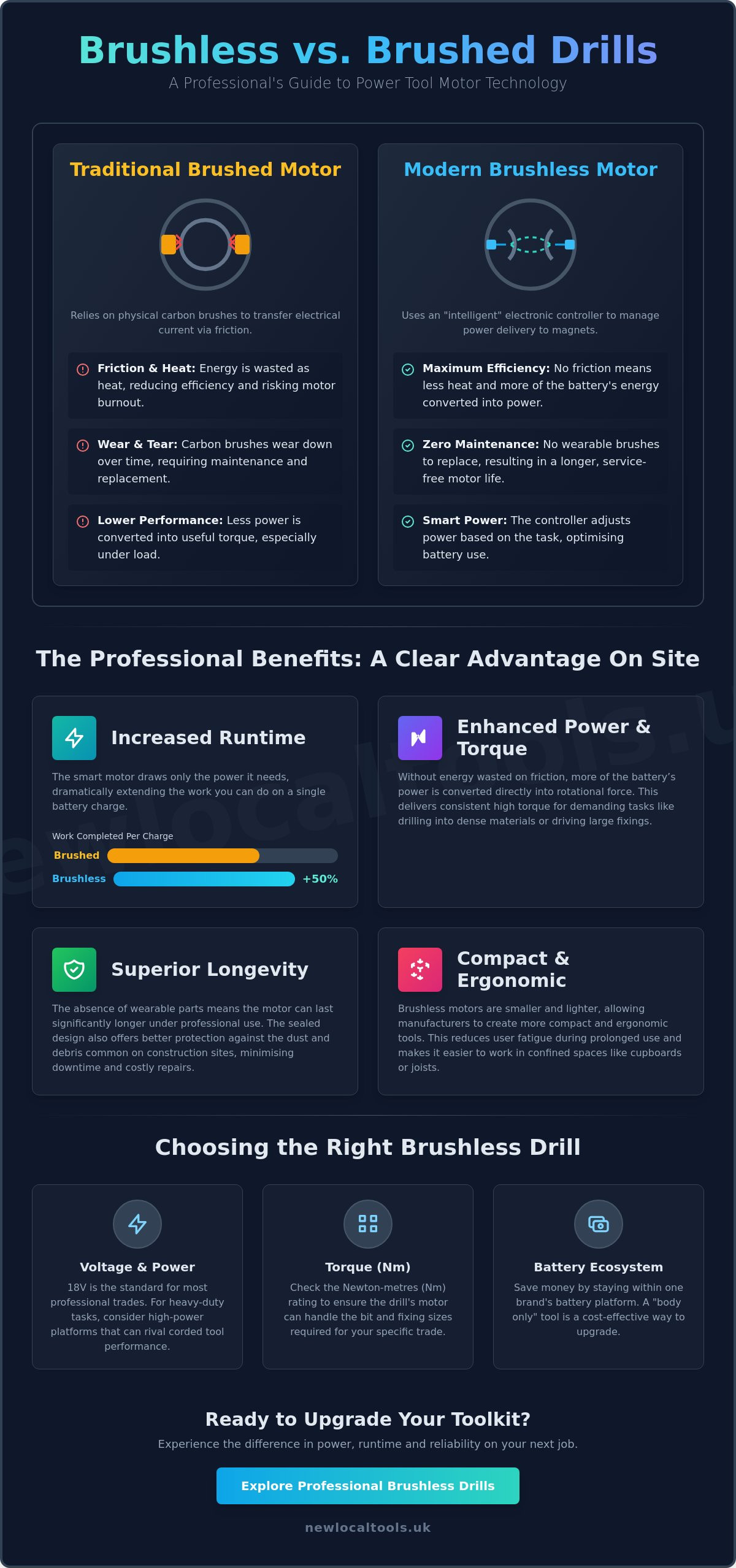
A brushless motor replaces physical carbon brushes with an electronic circuit board and magnets to manage power delivery.
-
Whilst traditional motors rely on friction to transfer current, brushless versions use a "smart" controller to deliver precise energy.
-
This lack of physical contact eliminates the friction, heat, and sparking commonly seen in older brushed drills.
-
An internal computer constantly adjusts power delivery based on the resistance of the material being drilled, drawing only what is needed from the battery.
The Problem with Carbon Brushes
To understand the benefits of brushless technology, it is important to first recognise the limitations of its predecessor. In a traditional motor, carbon brushes are the key component for transferring electricity. Carbon brushes are essentially wearable blocks of conductive carbon that conduct electricity to the motor’s commutator through physical contact.
-
These physical brushes wear down over time due to constant friction, eventually requiring the tool to be dismantled for replacement.
-
This friction also generates significant heat, which is a primary cause of motor failure during intensive site work and can lead to tool burnout.
-
Energy is wasted as heat rather than being converted into useful rotational force, making the tool less efficient.
How the Brushless Electronic Controller Works
The innovation that sets brushless motors apart is the electronic controller. This small circuit board acts as the motor’s brain, revolutionising how the tool uses battery power.
-
The controller senses the load and resistance as you work, drawing only the necessary amount of current from the battery.
-
This "on-demand" power delivery prevents the motor from wasting energy when performing lighter tasks, such as driving small screws.
-
By eliminating the brush assembly, the system allows for a more compact and sealed motor design, reducing the overall weight and size of the tool.
The Professional Benefits: Why Tradespeople Choose Brushless Drills
For a professional, a tool is an investment that needs to deliver a return through reliability and performance. Brushless drills provide tangible advantages that directly impact productivity and reduce long-term costs.
-
Increased Runtime: Efficiency gains often result in up to 50% more work per battery charge amongst leading brands, meaning less time spent changing batteries.
-
Enhanced Power and Torque: Without energy losses from friction, more of the battery’s power is converted directly into rotational force for heavy-duty drilling and driving.
-
Reduced Maintenance: The absence of wearable brushes means the tool stays in the van and out of the repair shop, minimising costly downtime.
-
Compact Design: Brushless motors are typically smaller, allowing for lighter, more ergonomic tools that are easier to use in tight spaces and reduce user fatigue.
Maximising Battery Efficiency on Site
For any tradesperson, battery life is a constant concern. Brushless technology directly addresses this by creating a smarter, more efficient power tool system.
-
The intelligent power draw allows for more holes drilled or screws driven per charge, reducing the need to carry multiple spare batteries.
-
This smart communication between the battery and motor also helps prevent overheating and deep-discharge damage, extending the life of your expensive battery packs.
-
During light-duty tasks, a brushless motor can draw up to 50% less power, preserving battery life for when you need it most.
Longevity and Tool Lifespan
A power tool is only useful if it works reliably day in, day out. The design of a brushless motor inherently contributes to a longer, more dependable service life.
-
Under professional use conditions, a brushless motor can last significantly longer than a brushed equivalent simply because there are no parts designed to wear out.
-
The sealed nature of these motors offers better protection for internal electronics from the dust and debris commonly found on busy construction sites.
-
This focus on reliability is a key factor to consider when browsing the shop for professional-grade equipment.
Choosing the Right Brushless Drill for the Job
While brushless technology is superior, selecting the right model still depends on the specific demands of your trade. It is important to look beyond the motor and consider the complete package to ensure it meets your needs.
-
Voltage and Power: Evaluate voltage requirements, typically 18V for most professional use. For the most demanding tasks, high-power platforms like the DeWalt XR Flexvolt range offer performance that rivals corded tools.
-
Torque Ratings: Consider the torque ratings, measured in Newton-metres (Nm), to ensure the motor can handle the diameter of bits required for your trade.
-
Brand Ecosystem: It is often most cost-effective to stay within one brand’s battery platform. If you already own batteries from a brand like Makita or Milwaukee, choosing a "body only" drill is an economical option.
-
Features and Ergonomics: Check for specific features that improve usability, such as integrated LED work lights, robust all-metal chucks, and ergonomic grips designed for all-day comfort.
Brushless vs Brushed: Application Comparison
Deciding between a brushless and a brushed model often comes down to the intended application. This table provides a clear summary of where each technology excels.
| Tool Type | Primary Use | When You Need It |
|---|---|---|
| Brushless | Heavy masonry drilling, repetitive timber fixing, steel fabrication, and all-day professional use. | When performance, runtime, and long-term reliability are critical to your job and income. |
| Brushed | Light occasional DIY tasks, assembling flat-pack furniture, or budget-conscious household repairs. | For infrequent use where the higher initial cost and performance of a brushless model are not necessary. |
What to Look for in a Professional Specification
When investing in a professional-grade brushless drill, certain features indicate a higher level of quality and durability.
-
High-quality metal gearboxes and chucks are essential to handle the increased torque and power produced by brushless motors.
-
Electronic clutch settings provide superior control and precision, preventing you from over-driving screws or damaging delicate materials.
-
Verify the warranty terms for brushless models, which are often longer and more comprehensive, reflecting the manufacturer’s confidence in the technology.
Essential Accessories and Consumables
To get the most out of a high-performance brushless drill, it is crucial to pair it with accessories that can handle the power. Using standard-duty accessories can lead to poor results and premature failure.
| Item | Use | Notes |
|---|---|---|
| High-Capacity Batteries | Powering the tool | Use 5.0Ah or higher Li-ion batteries to maximise runtime and power output. |
| Impact-Rated Drill Bits | Drilling and driving | These are designed to withstand the high torque of modern brushless motors without snapping. |
| Multi-Voltage Fast Charger | Charging batteries | A fast charger minimises downtime by getting your batteries back in action quickly. |
| Whether you are shopping for yourself or searching for the perfect present for a DIY enthusiast, you can explore DIY Tools at Klevaro. |
Frequently Asked Questions
Do brushless motors really last longer than brushed ones?
Yes. By eliminating carbon brushes—the primary component designed to wear out—brushless motors have fewer failure points and are not subject to the same friction and heat buildup. This results in a significantly longer operational lifespan, especially under heavy, professional use.
Can I use my old batteries with a new brushless drill?
Generally, yes, as long as you stay within the same brand and voltage platform (e.g., an 18V DeWalt battery with an 18V DeWalt tool). However, to get the maximum performance and runtime benefits from a brushless motor, it is recommended to use modern, high-capacity batteries (5.0Ah and above).
Why are brushless drills more expensive than brushed models?
The higher cost is due to the advanced technology involved, specifically the complex electronic controller (the "brain") and high-quality magnets required. While the initial investment is greater, many tradespeople find the cost is offset over time by increased productivity, longer tool life, and reduced maintenance needs.
Does a brushless motor require any special maintenance?
No, a key advantage of brushless motors is that they are virtually maintenance-free. With no brushes to inspect or replace, the only maintenance required is general tool care, such as keeping the vents clear of dust and debris to ensure proper cooling.
Is a brushless drill more powerful than a corded drill?
Modern high-end brushless drills, particularly those on high-voltage platforms, can now meet or even exceed the performance of many mid-range corded drills. They offer the significant advantage of portability without sacrificing the power needed for demanding applications like drilling through dense masonry or steel.




 153 Leytonstone Road, E15 1LH
 Log into your account


