
 153 Leytonstone Road, E15 1LH, London


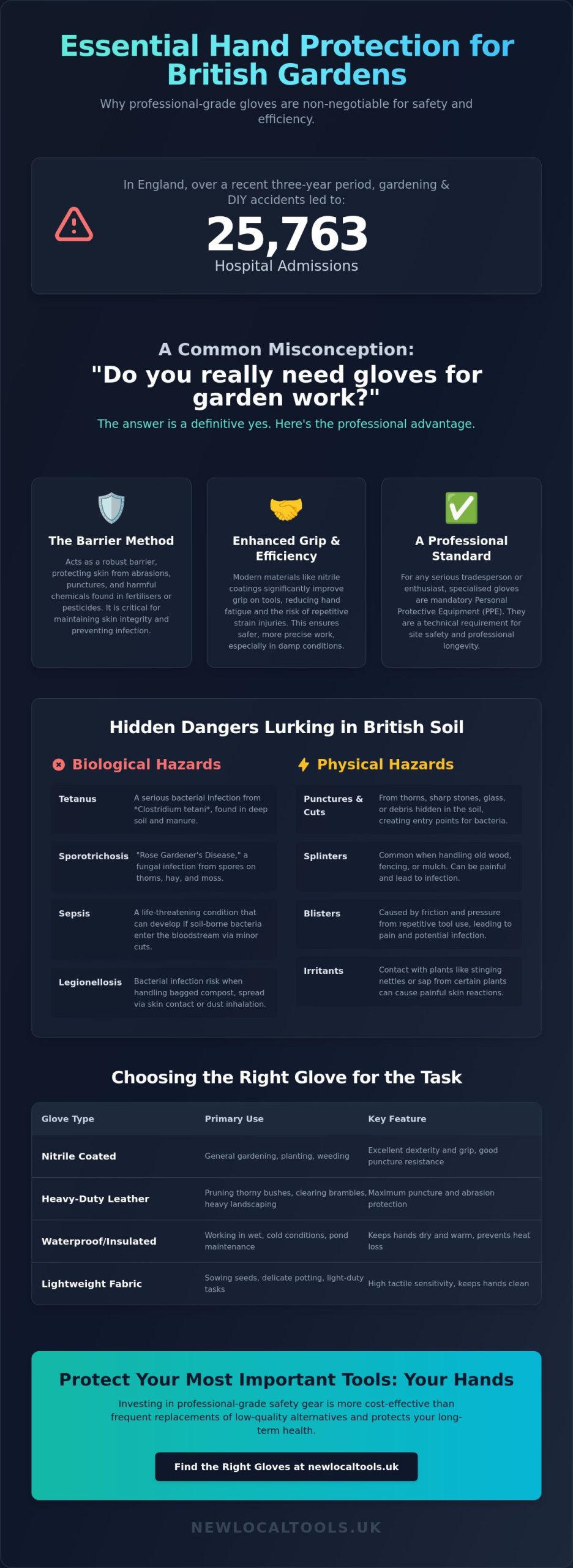
With 25,763 hospital admissions for gardening and DIY-related accidents recorded in England over a recent three-year period, the physical risks of outdoor work are significant. Many enthusiasts and tradespeople often wonder, do you really need gloves for garden work? especially when heavy-duty protection seems to come at the cost of dexterity. It is understandable to feel that bare hands offer better control for delicate tasks, yet this approach leaves the body vulnerable to more than just thorns and blisters.
This article explains why garden gloves are a vital piece of personal protective equipment for anyone prioritising safety and efficiency. It details the genuine health risks found in UK soil, including pathogens such as Tetanus and Legionellosis, and provides a practical framework for selecting the right pair for every job. Readers will learn how to find high-performance gloves that shield against punctures whilst maintaining the tactile sensitivity required for professional-grade tool handling. This guide ensures that every gardener can find a solution that balances protection with the technical accuracy needed for a productive day on site.
Key Takeaways
- Understand why specialised gardening gloves are essential Personal Protective Equipment (PPE) for shielding against mechanical injury and soil-borne pathogens.
- Address the common question, “Do you really need gloves for garden work?” by exploring the genuine risks of Tetanus and Rose Gardener’s Disease found in UK soil.
- Identify the most efficient materials for specific tasks to ensure the perfect balance between heavy-duty protection and the dexterity required for technical work.
- Learn how to inspect and maintain gloves as critical consumables to prevent the spread of plant infections and ensure long-term hand health.
- Recognise the cost-effectiveness of professional-grade safety gear compared to the hidden costs of frequent replacements for low-quality alternatives.
Table of Contents
Understanding the Importance of Hand Protection in Gardening
Gardening gloves serve as specialised Personal Protective Equipment (PPE) designed for rigorous outdoor maintenance. Their primary function is to act as a robust barrier against mechanical injury and biological contamination. Whilst many casual users might focus on keeping their hands clean, professionals recognise that gloves are a technical requirement for site safety. The question often arises: Do you really need gloves for garden work? When considering the risk of puncture wounds from thorns or lacerations from sharp debris, the answer is a definitive yes.
Professionals often face a sensory trade-off between tactile feedback and physical protection. Whilst bare-handing allows for a better sense of soil moisture or root structure, it leaves the skin exposed to pathogens and abrasive materials. Experienced tradespeople prioritise safety over the "feel" of the dirt because a single infection can lead to significant downtime. Beyond physical cuts, gloves prevent the skin from absorbing hazardous substances. Fertilisers, pesticides, and herbicides contain chemicals that can penetrate the dermis over time, making high-quality Gardening Tools and safety gear essential for long-term health.
The Barrier Method: Skin Integrity and Safety
Soil is naturally abrasive. Micro-abrasions caused by grit and sand act as microscopic entry points for bacteria. Maintaining skin integrity is not about aesthetics; it is about ensuring professional longevity by avoiding chronic dermatitis or systemic infections. PPE in a gardening context is a mandatory safety standard for trade work. Using different types of gloves tailored to the specific environment ensures that the hands remain functional and healthy throughout the working season.
Improving Grip and Tool Efficiency
Modern glove materials, particularly those with nitrile coatings, significantly improve torque when using manual hand tools. This increased friction allows for a more secure hold on trowels, shears, and spades with less physical effort. Proper glove friction reduces hand fatigue, which is a common cause of repetitive strain injuries in the trade. Bare-handing tools often leads to an inefficient grip, especially in damp conditions. This lack of control increases the likelihood of tool slippage and potential accidents on site. Selecting the right equipment from a professional shop ensures that every task is completed with maximum precision and safety.
Biological and Physical Risks Found in British Soils
When individuals ask, "Do you really need gloves for garden work?" they often focus on the inconvenience of bulky gear rather than the hidden dangers. The damp climate across the UK creates a perfect breeding ground for harmful moulds and fungi. Beyond these microscopic threats, the physical landscape of a garden is packed with sharp stones, wooden splinters, and stinging nettles. These elements cause immediate pain and create entry points for the pathogens mentioned earlier.
Pathogens Lurking in Compost and Soil
Minor scratches are inevitable on a busy site, but leaving them exposed is dangerous. Sepsis can develop from seemingly insignificant wounds if soil-borne bacteria enter the bloodstream. Legionellosis is also a documented risk, especially when handling bagged compost or mulch. The bacteria can thrive in the moist, warm environment of the bag and infect the user through skin contact or dust inhalation. Adhering to best practices for healthy gardens involves wearing gloves to maintain a physical barrier against these contaminants. Early signs of infection, such as localised heat, spreading redness, or persistent throbbing, require immediate medical attention to prevent complications.
Mechanical Injuries from Repetitive Tasks
Physical strain represents a constant threat to manual workers. Blisters form rapidly during the prolonged use of shovels, rakes, or hoes as friction wears down the skin. Without adequate palm padding, tradespeople also face significant tendon strain from gripping tools for hours. Puncture wounds are particularly hazardous because they are difficult to irrigate effectively. Unlike a shallow cut, a puncture pushes dirt and bacteria deep into the hand, where oxygen cannot reach. This creates an ideal site for infections like Tetanus to take hold. Investing in professional safety and workwear ensures that the hands are shielded from both mechanical impact and biological infiltration.
Comparing Garden Glove Types for Different Tasks
Efficiency on a professional site depends on selecting the right kit for the specific environment. Using a single pair of gloves for every gardening task is a common mistake that leads to premature wear and reduced productivity. The market offers a vast range of materials, from lightweight cotton for basic dust protection to heavy-duty leather for demanding structural work. Selecting the correct material ensures that the user maintains the necessary dexterity without compromising on safety. Practicality dictates that the choice of glove should be as technical as the choice of tool.
When tradespeople ask, "Do you really need gloves for garden work?" the answer often lies in the specific requirements of the job. A task like handling wet soil or liquid fertilisers requires a completely different barrier than pruning dense, thorny thickets. Fit and cuff style are equally important factors. Gauntlet-style gloves provide essential forearm protection when reaching into deep shrubbery, whilst wrist-length options offer better mobility for ground-level maintenance. As highlighted in the RHS guide on minimising health risks, specialised protection is non-negotiable for anyone handling soil-borne contaminants or abrasive vegetation.
Material Science: Choosing the Right Fabric
Nitrile-dipped gloves are the industry standard for wet work. The coating provides an excellent grip on damp tool handles and prevents moisture from reaching the skin. For handling timber, heavy masonry, or sharp rubble, leather rigger gloves are the superior choice due to their high abrasion resistance. During winter maintenance, thermal-lined options become essential. These gloves keep the hands warm to maintain blood flow and grip strength, which is vital for safe tool operation in cold UK conditions. Each material serves a distinct technical purpose in a professional’s inventory.
Task-Specific Selection Framework
The following table outlines the most efficient glove configurations for common outdoor tasks. The New Local Tools shop stocks professional-grade PPE for these specific scenarios.
| Task/Tool | Primary Glove Type | Why You Need It |
|---|---|---|
| Pruning Roses | Gauntlets | Protects forearms from deep thorn punctures and scratches. |
| Digging | Leather | Provides durability and prevents friction blisters from handles. |
| Seeding | Nitrile | Offers high dexterity and tactile sensitivity for small seeds. |
| Power Tool Use | Anti-vibration | Reduces hand-arm vibration syndrome (HAVS) and fatigue. |
Professional standards require that gloves are treated as task-specific equipment. A loose-fitting glove reduces grip strength and can become a snagging hazard when operating machinery. Conversely, an overly tight glove restricts circulation and leads to rapid hand fatigue. Achieving the correct balance between protection and comfort is the most effective way to ensure long-term hand health and operational efficiency on site.
Essential Consumables and Accessory Maintenance
Gardening gloves are active components of a professional safety kit, not permanent fixtures. Because they endure constant friction, moisture, and chemical exposure, they must be treated as consumables. Regular inspection is a technical necessity. A glove with a failed seam or a thinned palm no longer provides the barrier required to protect against the biological risks discussed earlier. Whilst some might ask, "Do you really need gloves for garden work?" the reality is that the effectiveness of that protection depends entirely on the condition of the gear. Worn-out PPE creates a false sense of security that often leads to avoidable injuries on site.
Maintaining these items involves more than just shaking off the dirt. Proper care extends the service life of high-end materials and ensures that the gloves remain a hygienic barrier. Accessories such as conditioners and disinfectants are essential for any tradesperson looking to maximise their investment. Neglecting maintenance leads to stiff, cracked materials that reduce dexterity and increase the risk of hand fatigue during complex tasks.
Cleaning and Organising Your PPE
Sanitising gloves is a critical step after handling diseased plant material, such as box blight or fungal infections. Cross-contamination can easily occur if pathogens are carried on the fabric from one area of a garden to another. For synthetic or nitrile-dipped options, a simple wash with a disinfectant spray is often sufficient. Leather gloves require more specialised care. They should never be dried on a radiator, as rapid heat causes the natural fibres to shrink and crack. Instead, they should be air-dried at room temperature and treated with a leather conditioner to maintain flexibility. Using a dedicated storage centre ensures that gear remains dry and protected from UV damage between jobs. Stanley storage solutions are ideal for keeping these accessories safe and dry in a van or workshop.
Restock Table for Gardening Essentials
The following consumables are necessary to maintain hand health and equipment integrity. Keeping these items in stock prevents downtime and ensures that safety standards remain high throughout the season.
| Item | Use | Notes |
|---|---|---|
| Anti-bacterial hand wash | Post-work hygiene | Essential for removing soil-borne bacteria after removing gloves. |
| Leather conditioner | Material maintenance | Prevents leather from stiffening and cracking after getting wet. |
| Replacement glove liners | Comfort and warmth | Wicks away moisture and provides an extra layer of protection. |
| Disinfectant spray | Biosecurity | Prevents the spread of plant diseases between different garden zones. |
Secure your hands against site hazards by browsing our latest Safety & Workwear deals today.
Professional Standards for Long-Term Hand Health
Adopting a professional standard for hand protection marks the transition from a casual hobbyist to a serious tradesperson or DIY enthusiast. When considering the long-term impact on hand health, the question "Do you really need gloves for garden work?" becomes a matter of professional standard rather than personal preference. A pragmatic approach to site safety involves acknowledging that the hands are a worker’s most valuable tools. Protecting them is not just about avoiding immediate pain; it is about ensuring that repetitive tasks don’t lead to chronic conditions or debilitating infections. In the professional trade, skipping PPE is a sign of poor preparation rather than experience.
Cost-effectiveness is a major driver for the professional user. Whilst budget-friendly options are readily available, they often fail under the mechanical stress of a busy site. High-quality PPE is engineered to withstand abrasion, chemical exposure, and moisture for significantly longer periods. Investing in a durable pair of gloves reduces the frequency of replacements and ensures that the protective barrier remains intact when it is needed most. This efficiency-driven mindset is what separates a professional operation from a reactive one. A culture of safety amongst UK DIY enthusiasts and tradespeople ensures that projects are completed without unnecessary health complications.
Investing in Quality Manufacturers
Leading brands such as DeWalt and Makita prioritise ergonomics in their safety wear designs. This focus on the human element reduces hand fatigue and prevents the onset of repetitive strain injuries. Professional tool brands understand the technical requirements of the trade, ensuring their hand protection offers the right balance of durability and dexterity. When selecting gear, look for the UKCA or CE marking on the packaging. These markers confirm that the product meets the legal safety standards for PPE in the UK, providing peace of mind for the buyer. Choosing equipment from a reputable shop ensures that the gear is fit for purpose and compliant with current regulations.
The Final Safety Checklist
A consistent safety routine is the best defence against garden-related injuries. Before starting any outdoor project, follow this final checklist to ensure maximum protection:
-
Inspect gloves for visible holes, thinning material, or failing seams before every use.
-
Ensure the glove cuff is properly tucked or secured to prevent soil, debris, or insects from entering.
-
Verify that the glove material matches the task, such as using heavy leather for masonry or nitrile for wet work.
-
Always wash hands thoroughly with anti-bacterial soap after removing gloves, regardless of how clean the skin appears.
-
Store gear in a dry, organised environment to prevent material degradation between jobs.
Frequently Asked Questions
How often should I replace my gardening gloves?
Gloves should be replaced as soon as the material shows signs of thinning, seam failure, or holes. For a regular tradesperson, this may be every few months, whereas a casual user may find a high-quality pair lasts several seasons with proper maintenance.
What is the best way to clean leather gardening gloves?
Leather gloves should be wiped clean with a damp cloth and allowed to air dry at room temperature. Avoid placing them on radiators, as high heat causes the leather to crack. Apply a leather conditioner periodically to keep the material supple and functional.
Do I need gloves when handling bagged compost?
Yes. Bagged compost can harbour Legionella bacteria. Wearing gloves and washing hands after use is a critical safety standard to prevent the risk of infection from soil-borne pathogens.




 153 Leytonstone Road, E15 1LH
 Log into your account


