
 153 Leytonstone Road, E15 1LH, London






The rise of high-performance cordless garden tools from brands like Makita and DeWalt has transformed how tradespeople and homeowners manage outdoor spaces. Yet, with increased power comes a greater need for proper Personal Protective Equipment (PPE) . Standard gardening gloves and a pair of old boots are no longer sufficient to protect against the risks posed by modern strimmers, hedge trimmers, and leaf blowers . Understanding which specific PPE is required for each tool is crucial for ensuring safety and complying with UK regulations.
This guide provides a comprehensive overview of the essential PPE for using cordless garden tools. It explains the relevant UK safety standards, breaks down the right gear for each task, and offers practical advice on maintenance and replacement, ensuring you can work efficiently and safely.
Table of Contents
Understanding UK Safety Standards for Garden Tool PPE
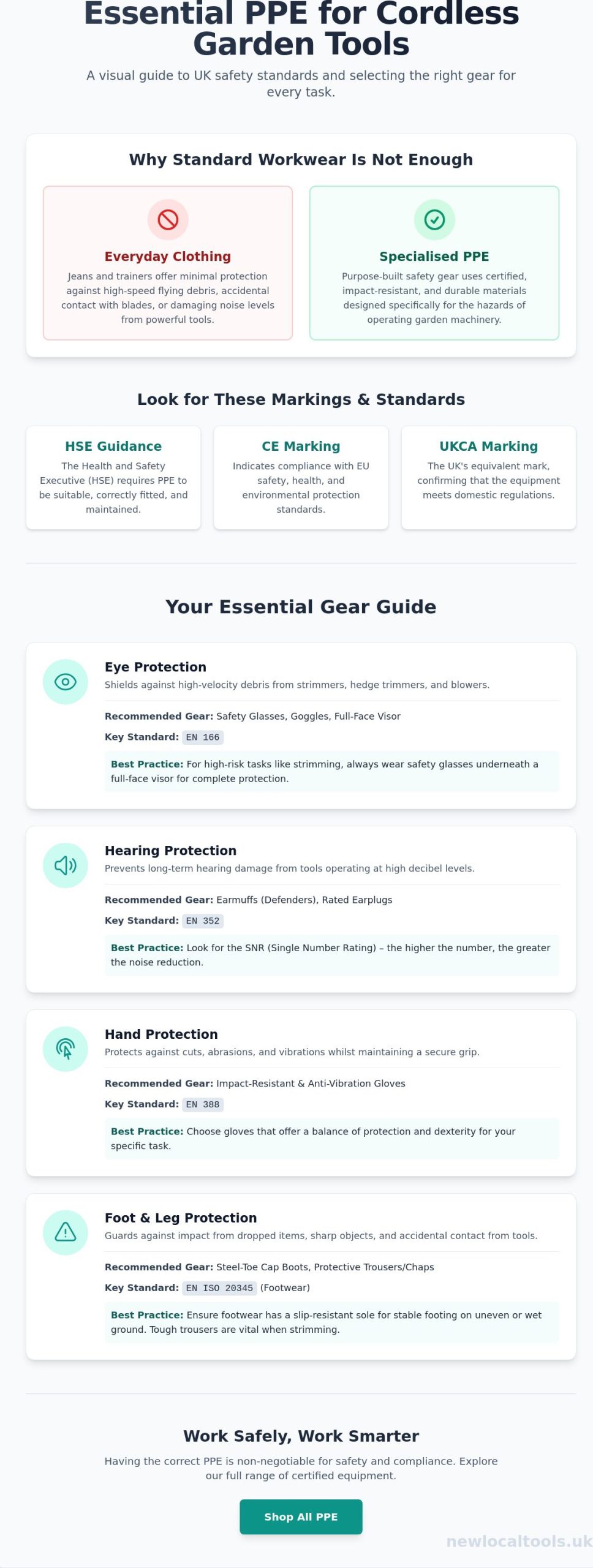
Personal Protective Equipment for garden machinery is more than just clothing; it’s a system designed to protect you from specific hazards like flying debris, high-speed projectiles, excessive noise, and sharp blades. In the UK, the Health and Safety Executive (HSE) sets out clear requirements for employers to provide adequate PPE under the Provision and Use of Work Equipment Regulations (PUWER). For both professionals and serious DIY users, selecting equipment that carries CE and UKCA marking is essential, as this verifies it has been tested to meet required safety standards.
-
HSE Requirements: Mandates that PPE must be suitable for the risk, fitted correctly, and properly maintained.
-
CE/UKCA Marking: Confirms that the equipment meets European and UK safety, health, and environmental protection standards.
-
Why Standard Workwear Fails: Everyday clothing like jeans and trainers offers minimal protection against a stone flung from a strimmer or accidental contact with a hedge trimmer blade. Specialised PPE uses impact-resistant and durable materials designed for these specific risks.
-
Key Standards to Know: Look for EN 166 for eye protection, EN 352 for hearing protection, EN 388 for protective gloves, and EN ISO 20345 for safety footwear.
UK Legal Requirements for Professional Operators
For professional gardeners, landscapers, and groundskeepers, the law is explicit. Employers have a legal duty to provide necessary PPE free of charge to their employees. This equipment must be regularly inspected and replaced when it becomes worn or damaged. Documenting these checks is a key part of maintaining a safe work environment and ensuring compliance. For a broader look at site safety, our guide to essential PPE for construction sites offers further valuable insights.
-
PUWER Summary: Employers must ensure work equipment, including PPE, is suitable for its intended use and maintained in a safe condition.
-
Employer Responsibilities: Includes providing appropriate training on how to use, store, and maintain PPE correctly.
-
Documented Inspections: Keeping records of PPE checks helps track the equipment’s condition and lifespan.
Essential Head, Eye, and Hearing Protection
-
Eye Protection (EN 166): This is the absolute minimum. Safety glasses protect from stray twigs and dust, but a full-face visor is essential for strimming or hedge trimming, which create significant high-velocity debris.
-
Hearing Protection (EN 352): Cordless leaf blowers, mowers, and even some powerful strimmers can operate at decibel levels that cause long-term hearing damage. Earmuffs (defenders) or rated earplugs are critical. Look for the SNR (Single Number Rating) to understand the level of noise reduction provided.
-
Head Protection: While a hard hat isn’t always necessary for ground-level work, it becomes vital when working under trees or using pole saws where there is a risk of falling branches.
Choosing Your Visual and Auditory Shielding
Selecting the right type of eye and ear protection depends on the tool and the environment. A mesh visor, for example, offers excellent ventilation and won’t fog up, making it ideal for strenuous strimming work on a warm day. However, it won’t stop fine dust, so wearing safety glasses underneath is best practice. For noise, electronic ear defenders are a great choice for professionals as they block out the harmful loud noise of the tool whilst allowing you to hear conversations and warning sounds in the surrounding environment.
-
Visors vs. Goggles: A visor protects the whole face from impact, whilst safety goggles provide a better seal against fine dust and particles.
-
Layering Protection: Always wear EN 166 certified safety glasses or goggles, even when using a face shield, for maximum protection.
-
SNR Ratings: The higher the SNR rating on ear defenders, the greater the level of noise attenuation they provide.
Hand, Leg, and Foot Protection for Garden Tasks
Your extremities are constantly exposed when operating garden machinery. Protecting them requires tool-specific gear that balances safety with the need for dexterity and comfort.
This balance is also a hallmark of high-quality outdoor apparel; for example, the rugged clothing and footwear available from Wood To Water Outdoors are designed to withstand the same harsh conditions often encountered during extensive garden clearance or landscaping.
-
Protective Gloves (EN 388): Look for gloves that offer good grip, cut resistance for handling blades, and vibration-dampening features for comfort during prolonged use of tools like hedge trimmers.
-
Durable Trousers: For general garden work, hard-wearing work trousers will suffice. However, if you are using a cordless pole saw or chainsaw, you must wear certified chainsaw trousers with cut-retardant properties.
-
Safety Boots (EN ISO 20345): Sturdy, ankle-supporting boots are essential. Key features include a protective toecap (steel or composite) to guard against falling objects and deep-cleated, non-slip soles for stability on wet grass or uneven ground.
Summary Comparison of Garden Tool PPE
Different tools present different hazards. This table breaks down the essential PPE you need for the most common cordless garden equipment.
| Tool | Primary Use | Essential PPE You Need |
|---|---|---|
| Strimmer / Brushcutter | Cutting long grass, weeds, and light brush | Full-face visor, safety glasses, ear defenders, anti-vibration gloves, and steel toe-cap boots. |
| Hedge Trimmer | Trimming and shaping hedges and bushes | Safety glasses or goggles, gloves with excellent grip, and sturdy footwear. |
| Leaf Blower | Clearing leaves, grass clippings, and light debris | Ear defenders, safety goggles (to protect from dust), and protective gloves. |
| Cordless Lawn Mower | Cutting grass | Steel toe-cap boots and ear defenders (for larger, louder models). |
| Cordless Pole Saw | Pruning high branches from the ground | Full arborist helmet system (visor, ear defenders), chainsaw gloves, Type A or C chainsaw trousers, and chainsaw boots. |
Maintenance, Lifespan, and Replacing Your PPE
Even the best quality PPE wears out over time. Regular inspection and proper maintenance are vital to ensure your gear continues to provide the protection you rely on. Exposure to sunlight (UV radiation), dirt, and oils can degrade materials, compromising their safety features.
-
UV Degradation: Plastic components like helmet shells and visors become brittle over time with sun exposure. Most helmets have a recommended replacement date stamped on them.
-
Regular Cleaning: Keep visors clean for clear visibility and wash gloves to maintain grip. Always follow the manufacturer’s cleaning instructions to avoid damaging protective materials.
-
Daily Inspections: Before each use, check for cracks in helmets, deep scratches on glasses or visors, and holes or worn patches on gloves and boots.
-
Proper Storage: Store PPE in a cool, dry place away from direct sunlight, fuel, and chemicals to maximise its lifespan.
PPE Consumables Restock Table
Certain PPE components are considered consumables and require regular replacement to maintain safety standards. Keeping spares on hand is a smart way to avoid downtime on the job.
| Item | Use | Notes (When to Replace) |
|---|---|---|
| Safety Glasses / Visors | Eye and face protection | Replace immediately if deeply scratched, cracked, or if vision is impaired. |
| Ear Muff Cushions | Forms a seal for hearing protection | Replace when they become hard, cracked, or compressed, as a poor seal reduces effectiveness. |
| Work Gloves | Hand protection, grip, and vibration reduction | Replace when holes appear, the grip is worn smooth, or anti-vibration pads are compressed. |
| Helmet Sweatbands | Comfort and hygiene | Replace regularly for hygiene and to ensure a comfortable, secure fit. |
Selecting the Right PPE for Your Cordless System
Modern cordless garden tools deliver performance that rivals, and often exceeds, their petrol counterparts. Choosing a powerful cordless platform means you also need to invest in professional-grade PPE. The convenience of battery power does not reduce the physical risks involved; the blades spin just as fast and the debris flies just as far.
-
Match PPE to Power: The higher the performance of your tools, the more robust your PPE needs to be. Don’t compromise on safety.
-
Avoid Unbranded Imports: Cheaper, uncertified PPE often fails to meet UK safety standards and can provide a false sense of security. Always purchase from a reputable retailer.
-
Invest in a System: Building a complete PPE kit ensures you have the right protection for every task, from light trimming to heavy-duty clearing.
The New Local Tools Advantage
Sourcing your PPE from a trusted UK supplier guarantees that you are getting genuine, certified equipment that complies with all necessary safety regulations. It ensures your gear is fit for purpose, whether you’re a professional landscaper or a dedicated DIYer tackling a garden project. Investing in quality workwear is an investment in your personal safety.
Ready to get the right gear for the job? ****View the full Safety & Workwear range and ensure you’re protected every time you work.
Frequently Asked Questions (FAQs)
**Do I need the same **PPE for a battery-powered strimmer as a petrol one?
Yes. The primary hazards from a strimmer—high-speed rotating line and flying debris—are identical regardless of the power source. Full eye, face, and hearing protection, along with sturdy boots, are essential for both.
Can I just wear sunglasses instead of certified safety glasses?
No. Sunglasses are not a substitute for safety glasses. They lack the impact resistance and side protection required by the EN 166 standard and can shatter on impact, potentially causing a more severe eye injury.
Are steel toe-cap boots necessary for mowing the lawn?
They are highly recommended. A mower is a heavy piece of equipment, and safety boots protect your feet from the risk of the blade, accidental slips on wet grass, and the weight of the machine if it rolls over your foot.
How do I know if my gloves are suitable for garden work?
Look for gloves with an EN 388 rating, which indicates their resistance to abrasion, cuts, tears, and punctures. For operating machinery, also consider features like enhanced grip and anti-vibration padding for comfort and control.


 153 Leytonstone Road, E15 1LH
 Log into your account


